AI Data Centers Use Massive Electricity | How “Killing AI” Could Affect Your Power Bill
bigsansar | Jan. 4, 2026
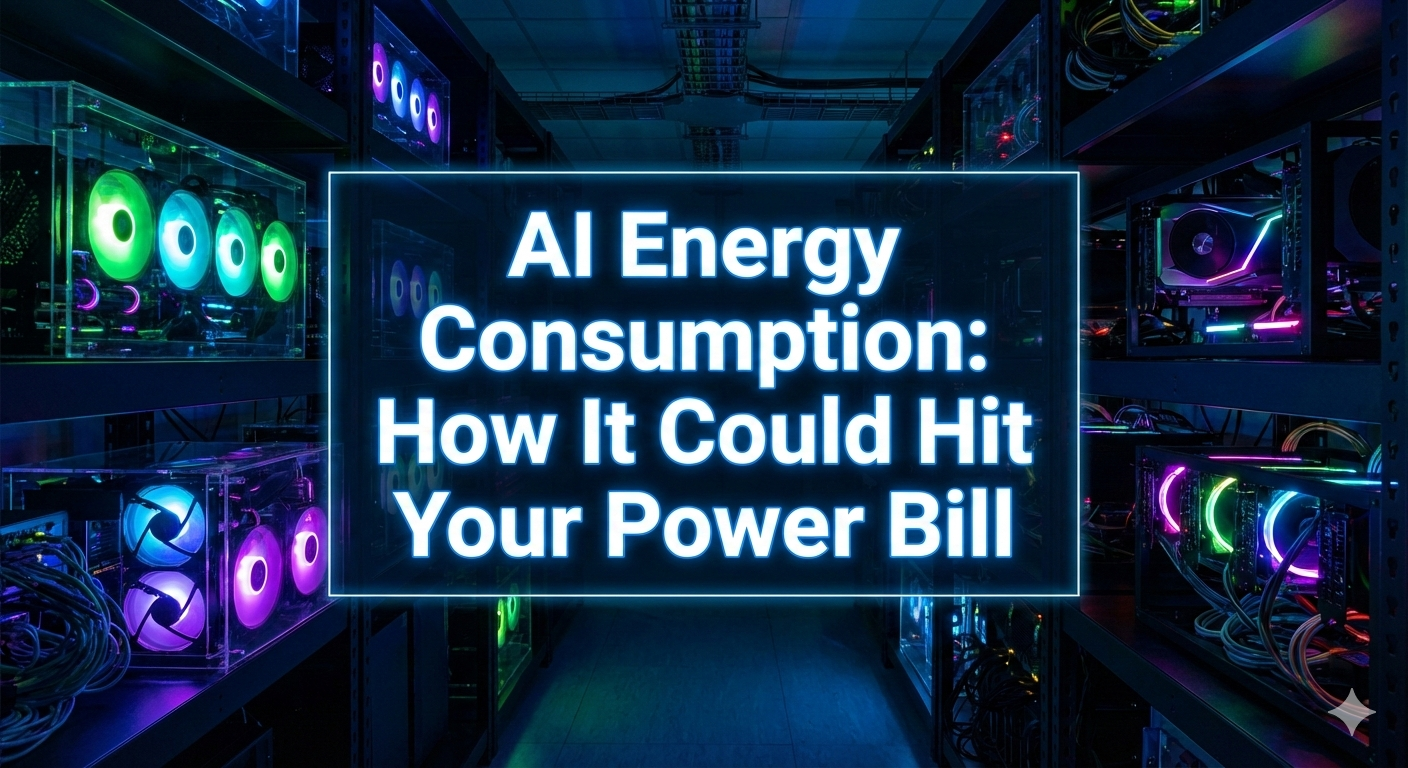
Artificial intelligence (AI) is transforming the way we live and work. From smart assistants to image and video generators, AI is everywhere. However, behind these conveniences are AI data centers, the powerful facilities where AI models are trained and run. These data centers are extremely energy-intensive, consuming vast amounts of electricity not only to operate servers but also to keep them cool.
Research shows that in 2024, data centers consumed about 1.5% of the world’s total electricity, and AI workloads alone account for 10–20% of that consumption. Training a single AI model can sometimes use as much electricity as an entire household consumes in several months. If current trends continue, by 2030, AI could account for 30–50% of total data center energy use, pushing overall consumption to nearly 900–1,000 TWh.
For most households, AI won’t appear as a separate charge on your power bill, but the growing demand puts pressure on the electricity grid. In regions with large AI data center clusters, this can result in higher energy costs and indirect increases in residential electricity rates. A real-world example is Northern Virginia, where an expansion of AI data centers increased grid load and influenced local electricity pricing.
The phrase “killing AI” has been used in discussions not because AI is inherently dangerous, but because its massive energy appetite threatens sustainability goals. Even as AI models become more energy-efficient, the total demand continues to rise due to increasing usage, a phenomenon similar to the Jevons Paradox. Without renewable-powered data centers and energy-efficient AI solutions, this could create serious environmental and economic consequences.
In summary, AI data centers are essential for powering today’s technologies, but their energy consumption has real-world implications. While you may not see an immediate spike in your electricity bill, the growing demand adds pressure to power grids and could affect energy costs over time. The key takeaway is that the AI revolution comes with hidden environmental and economic costs that need to be managed carefully.
0 COMMENTS:

NVIDIA DGX Station for Windows Brings Trillion-Parameter AI to the Desktop
NVIDIA has introduced DGX Station for Windows, a powerful AI workstation capable of running trillio…

Cybersecurity Tips to Stay Safe Online | Digital Safety Guide
Learn essential cybersecurity tips to protect your accounts, personal data, and privacy online. Sta…
OpenClaw: Nvidia’s Next ChatGPT & AI Future | NemoClaw
Nvidia CEO Jensen Huang calls OpenClaw the next ChatGPT. Discover NemoClaw and how autonomous AI ag…
NVIDIA DLSS 5 Explained: Realistic Lighting & RTX 50-Series Performance
Discover NVIDIA DLSS 5: AI-powered upscaling and improved ray tracing for RTX 50-Series GPUs. Learn…

Crimson Desert Editions Explained: What Comes in Each Edition?
Discover what comes in each Crimson Desert edition. Compare Standard, Deluxe, and Collector’s Editi…

iOS 26.4 Beta 1 Features: Stolen Device Protection Default for All iPhones
Discover the latest iOS 26.4 beta 1 features. Reports suggest Apple may enable Stolen Device Protec…

Google Pixel 10a First Look: Leaks, Expected Specs, Price & Release Date
Get your first look at the new Google Pixel 10a. Explore the latest leaks, expected specs, camera u…

How to Report Phishing: A Comprehensive Guide to Stay Safe Online
Learn what phishing is and how to report phishing scams. This complete guide explains phishing sign…

Race for AI Could Trigger Hindenburg-Style Disaster: Expert Warning
Leading AI expert warns that the global race for artificial intelligence could create a Hindenburg-…

Essential Cybersecurity Tips for All Gadget Users – Protect Your Data
Learn the top cybersecurity tips for smartphones, laptops, tablets, and smart devices. Protect your…